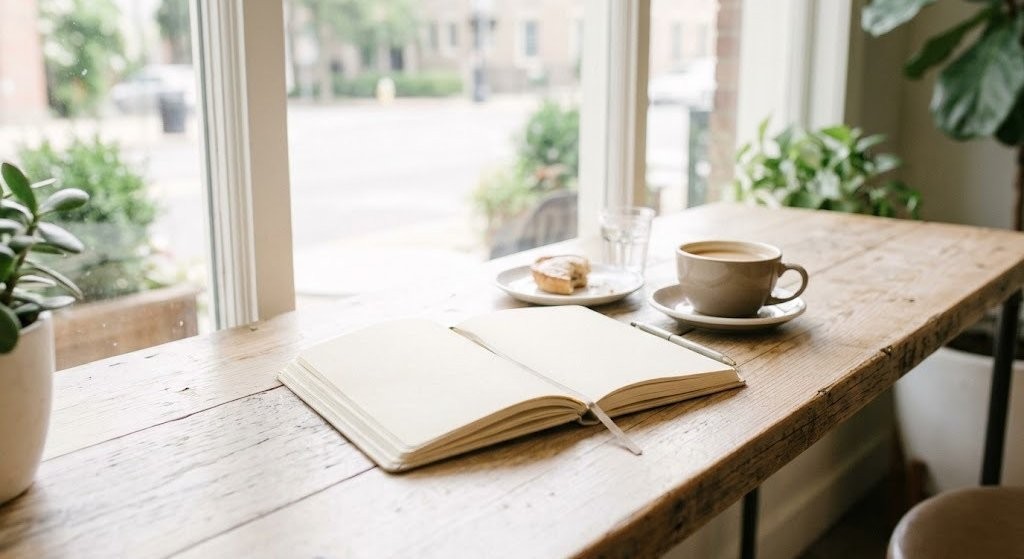
January 2021, a cheap notebook open on a desk in a shared flat in a new city. The first page holds five lines, daily habits, written on the first morning of a first job. The notebook is still there, and reading it back traces a year in which the uncontrollable parts of life stayed exactly as uncontrollable as ever while everything within reach changed hands. Some things in life can be steered and some cannot, and the whole turn of that winter was learning to tell them apart.
The stuck era, before the move
Through 2020 the unchangeable list ran long: lockdowns without end, restrictions on every plan, and a job that had stopped fitting. Waiting for circumstances to improve was the default, and it produced nothing. The break came from sorting every complaint into one of two piles, the ones no personal action could touch and the ones that were, in fact, personal choices wearing bad luck as a disguise. Environment, routine and work all sat in the second pile. That sorting exercise, done in one evening, was the pivot.
The move, late 2020
Changing city was the first lever pulled, and the first time living independently outside of months spent backpacking. With travel impossible, a new city was the available substitute for a new country, and it worked better than expected. Living with people of the same age, walking distance from a city centre, gave back a independence that had quietly eroded. Socialising remained off the table under the rules, so the win was structural rather than social, yet the effect on mental state was, honestly, wonders. The lesson stuck: when you cannot change the big picture, change your addressable radius.
Day one of the job, January 2021
The same winter brought a first day as a Project and Contract Manager, and with it the familiar weight of impostor syndrome, the persistent feeling of not being good enough for the role. The working answer was mechanical rather than inspirational: write down why this job was wanted in the first place, list the positives and the development routes, and reread the list whenever the feeling returned. One sentence from the notebook survives as the whole method in miniature: remind yourself you are fully capable, then break down the why. The previous job had ended in the same notebook with no such list, and the difference between the two endings is the entire argument of this piece.
The five habits, and what remains
New Year's resolutions were never the frame, since changing things once a year makes little sense; these were continuous goals, meant to run daily and adjust weekly. The traces that survive today are easy to list.
- Daily reading of personal development books, the habit that stuck hardest.
- Chasing the highest excitement each day, doing what genuinely makes the day good.
- Continued Spanish study, aimed long term at something close to fluency.
- Positive affirmations, written and spoken, against the impostor voice.
- Daily exercise, the habit that lapsed most and returned most.
What the notebook proves now
One habit deserves a caveat: affirmations feel absurd for the first week, and that is not a reason to stop.
Rereading those five lines later, the pattern is obvious: every one of them is a small, daily, controllable act, chosen in a season when nothing large was controllable at all. The lockdowns ended, the job changed again, the city kept or lost its charm, and the habits quietly outlived the era that produced them. The object from the first paragraph, that notebook on the desk, is the proof a visitor to that flat could hold: happiness, in that winter, was not found, it was scheduled.
The era closed, and the method stayed.